More Than a Massage: A Story 2,500 Years in the Making
Traditional Thai massage is not just a modern wellness trend. Its roots stretch back more than two thousand years — to the world of Indian Ayurveda, yoga and early Buddhism.
The philosophy of Thai massage is built on the concept of energy pathways. According to Thai tradition, life energy flows through the body, and when these pathways become blocked, illness, stress or pain follows.
Traditional Thai massage does not rely on hands alone. It is a „rhythmic dance“ in which the therapist uses thumbs, elbows, knees and feet to gently apply pressure and stretching that release these blockages. The goal is not simply to work the muscles, but to bring the whole body into a state of meditation and harmony.
Where Thai Massage Comes From
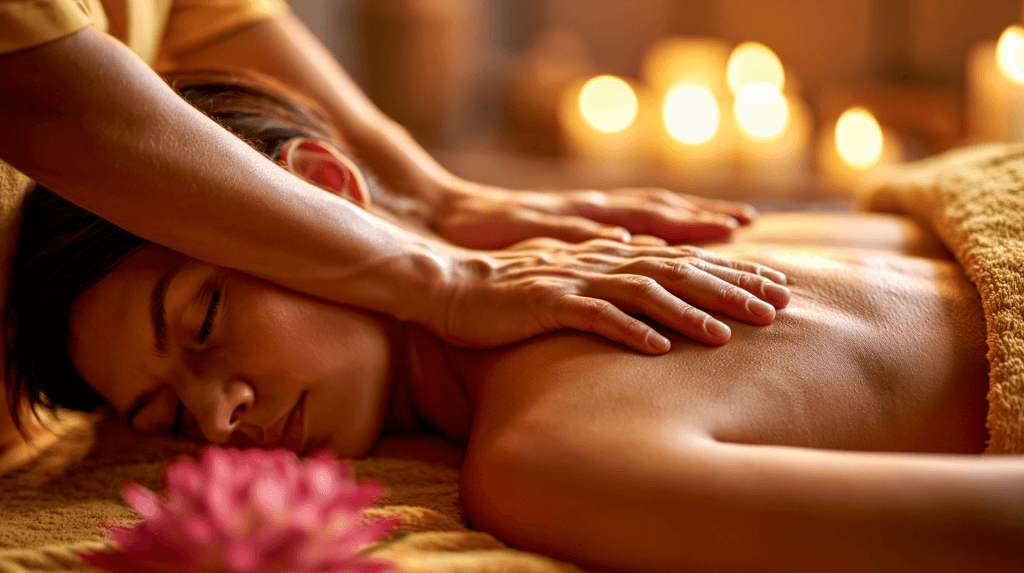
Thai tradition honours a figure known as Shivago Komarpaj — referred to in Buddhist sources as the personal physician of the Buddha himself. Together with Buddhist monks, this knowledge travelled across China and into Thailand, where it was further refined in monasteries and temples and gradually blended with local Thai understanding of the body and medicinal herbs.
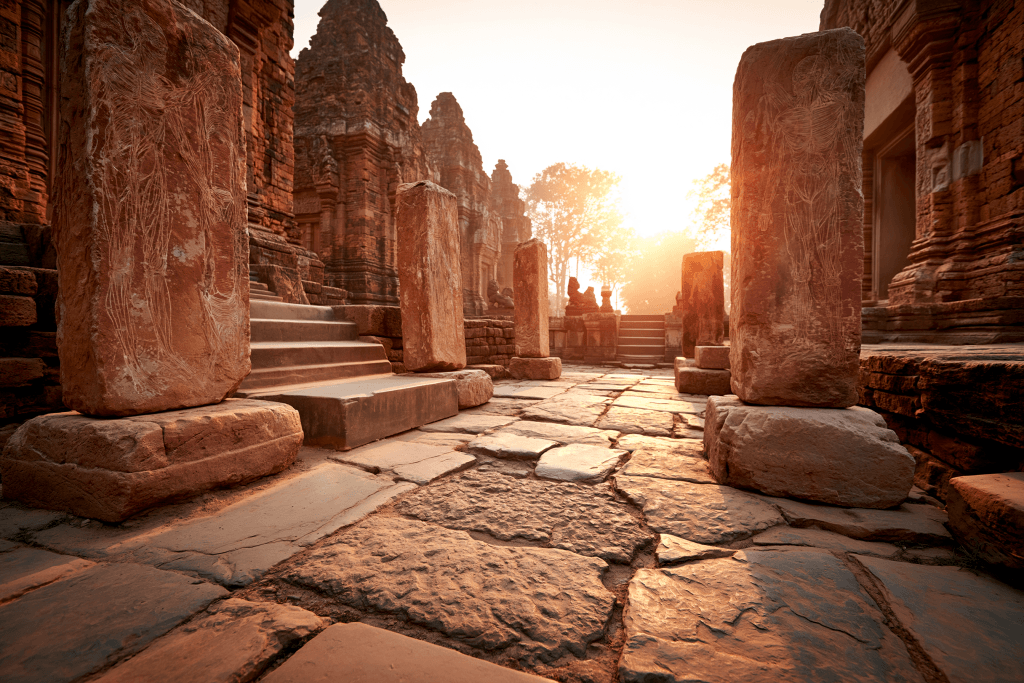
When the Burmese army destroyed the then-capital Ayutthaya in 1767, most of the written medical texts were lost in the flames. To prevent the knowledge from disappearing entirely, King Rama III ordered what had survived to be carved in stone — in Bangkok’s Wat Pho temple you can still find 60 stone tablets depicting the points and lines that a therapist follows during a session. Wat Pho thus became Thailand’s first „university“ of traditional medicine, and in many ways it still is.
The significance of this tradition has been recognised internationally: in December 2019, UNESCO inscribed Nuad Thai — traditional Thai massage — on the Representative List of the Intangible Cultural Heritage of Humanity. It became the first massage discipline in the world to receive this distinction.
The Philosophy: Sen Energy Lines
According to Thai tradition, life energy flows through the body along a network of invisible pathways called Sen. Traditional Thai massage works primarily with ten main lines, known as Sen Sib, which run from the centre of the body outward toward the limbs, head and spine.
This concept is not unique to Thai tradition — similar pathways appear in Indian yoga (nadis) and Chinese medicine (meridians). While Chinese acupuncture works with needles, a Thai therapist „opens“ the lines with their hands: through the pressure of thumbs, palms, elbows and feet, combined with gentle stretching that brings the body into positions reminiscent of yoga.
Also central to this philosophy is the idea of four fundamental elements within the body — earth, water, fire and wind. The aim of the massage is to bring these back into balance, supporting a feeling of harmony, calm and inner strength.
What the Research Says
Traditional Thai massage is not only a matter of tradition — it is the subject of growing scientific interest. A systematic review of six controlled studies published in 2015 found that participants reported pain reductions ranging from 25 to 80 percent, alongside improvements in mobility and reductions in muscle tension and anxiety, with positive effects lasting up to 15 weeks after the final session.
Further studies have focused on specific areas:
- Back pain — repeated Thai massage sessions have shown comparable relief from lower back pain to classical physiotherapy joint mobilisation.
- Headaches — in people with chronic tension headaches and migraines, a course of sessions led to an increased pain threshold and reduced headache intensity.
- Flexibility — in athletes (both football and volleyball players), several sessions produced measurable improvements in range of motion at the knees and ankles.
- Relaxation — measurements of brain activity confirm that during and after Thai massage the body enters a deeper state of relaxation.
These findings help explain why Thai massage is so often recommended as a support for back, neck and joint pain, restricted flexibility, stress, insomnia and chronic fatigue — always as a complement, not a replacement, for medical care.
What a Traditional Session Looks Like
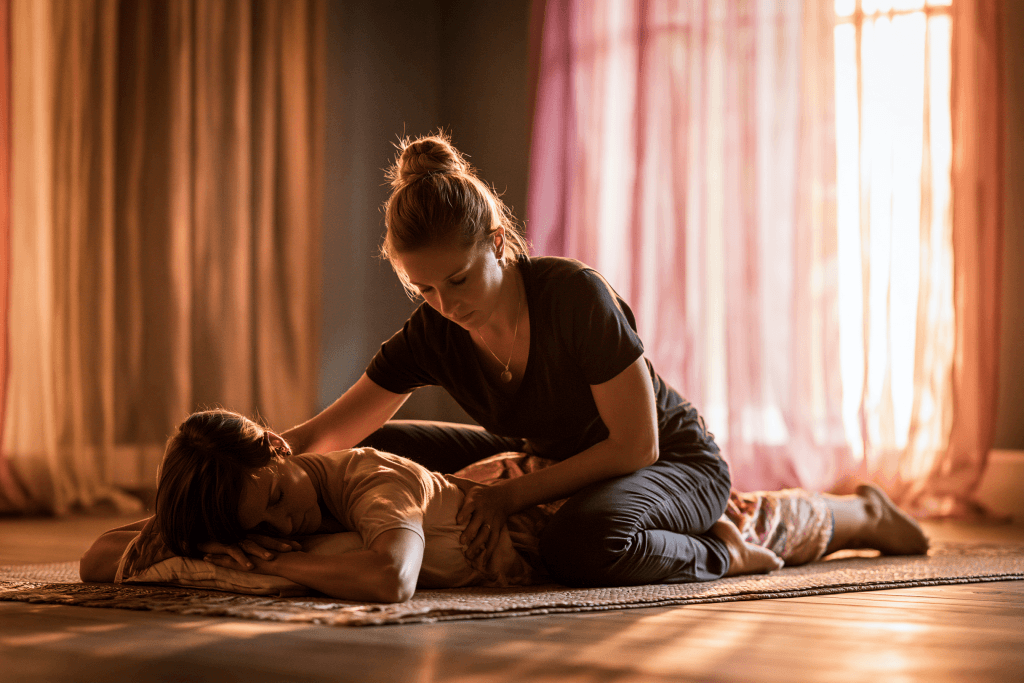
A traditional Thai massage session differs from most massages you may be used to. It takes place on a comfortable floor mat, the client remains dressed in loose, comfortable clothing, and no oil is used.
The therapist works in a systematic sequence — typically starting at the feet and moving toward the head — alternating between palms, thumbs, forearms, elbows, knees and feet. The session also includes assisted stretches in which the therapist gently guides the client’s body into positions similar to yoga poses. This is exactly why Thai massage is sometimes called „lazy yoga“ — you are being stretched, but someone else is doing all the work.
Who Is Thai Massage Suitable For
Traditional Thai massage is suitable for most adults looking for relief from both physical tension and mental stress. Before the session, it is always worth letting the therapist know about any health conditions or medications. We recommend extra caution or a consultation with your doctor in the following cases:
- pregnancy,
- osteoporosis,
- recent surgery or injury,
- blood-clotting disorders or thrombosis,
- uncontrolled high blood pressure or heart conditions,
- fever, infectious or skin conditions.
We recommend avoiding heavy meals before the session and keeping well hydrated — both beforehand and afterward. During the session, please do not hesitate to let your therapist know if the pressure feels too strong or too gentle.
Benefits of Thai Massage
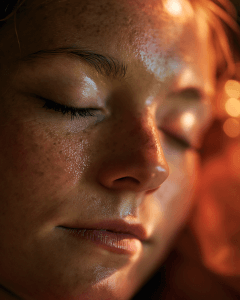
- Physical relief — helps ease pain in the back, neck and joints and supports flexibility and range of motion.
- Circulation support — stimulates the lymphatic system and blood flow.
- Mental relaxation — helps reduce perceived stress and supports better sleep for those dealing with insomnia and chronic fatigue.
- Self-awareness — helps you slow down in today’s fast-paced world and tune in to your body’s signals.
- Vitality — regular massage contributes to a renewed sense of energy and inner balance.
- Headache relief — helps reduce the frequency and intensity of tension headaches.
Experience a Tradition That Has Survived the Centuries
At Demika Thai Massage, we bring this thousand-year-old tradition straight to you in Ružinov — with deep respect for its origins and through the skilled hands of experienced Thai therapists. Come and discover the rhythm that unites body and mind into one peaceful whole.